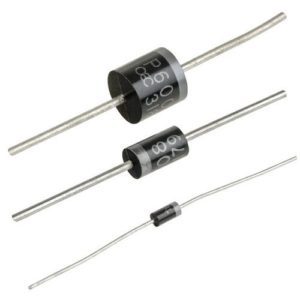
Key Features: ✔ Schottky barrier diode for low forward voltage drop✔ Maximum Reverse Voltage (VRRM): 20V✔ Continuous Forward Current (IF): 1A✔ Peak Surge Current (IFSM): 25A✔ Fast switching speed for high-frequency applications✔ Low Forward Voltage Drop (VF): 0.45V max✔ DO-41 package for easy integration into circuits✔ Ideal for power supplies, converters, and polarity protection
Key Features: ✔ Fast-switching Schottky diode for efficient power conversion✔ Maximum Reverse Voltage (VRRM): 40V✔ Continuous Forward Current (IF): 3A✔ Peak Surge Current (IFSM): 80A✔ Low Forward Voltage Drop (VF): 0.45V max✔ Fast recovery time reduces switching losses✔ DO-201AD package for easy mounting and heat dissipation✔ Ideal for power supplies, converters, and solar chargers
1uF Radial Electrolytic Capacitor has polarity. That is, it has both a positive and negative pin. The long pin is the positive while the short pin is the negative. Polarity can also be identified using the negative strip on the capacitor label. The negative pin will be directly under the negative symbol.
2 nf Ceramic Capacitor has no polarity. That is, it can be connected in any direction. It is breadboard friendly. To add on that,it can be easily used on a perf board.
2 pf Ceramic Capacitor has no polarity. That is, it can be connected in any direction. It is breadboard friendly. To add on that,it can be easily used on a perf board.
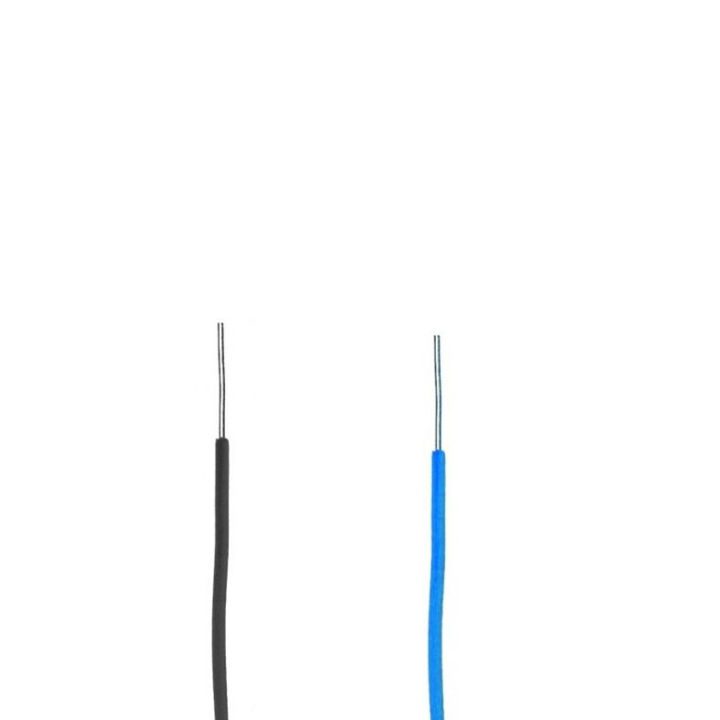
Features: Single core tinned copper wire. Single Core Cable 24 AWG, 10 cm. Dimensions: Outer Diameter: 1.2 mm nominal. Wire diameter: 0.5105 mm. Wire area: 0.2047 mm2 Length: 10 cm.
2.2 nf Ceramic Capacitor has no polarity. That is, it can be connected in any direction. It is breadboard friendly. To add on that,it can be easily used on a perf board.
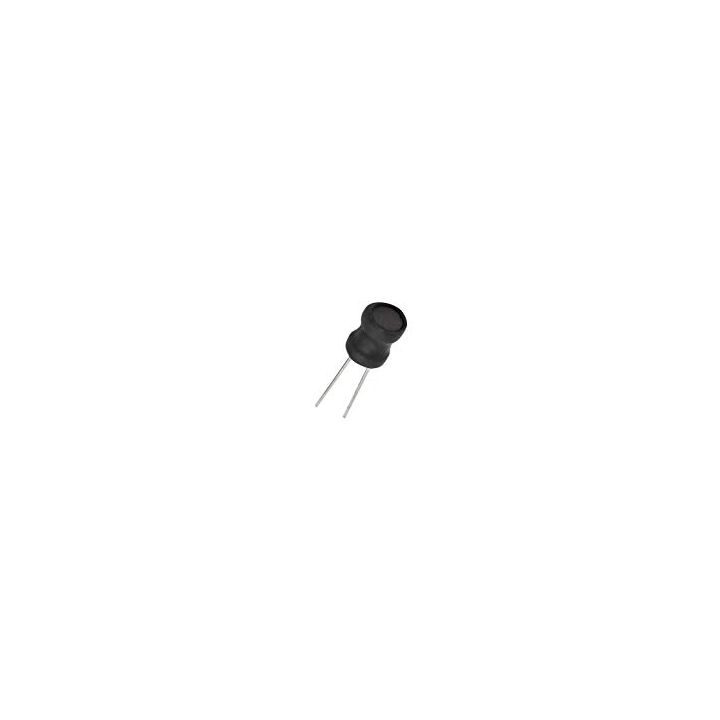
2.2 uH Radial inductor is leaded with ferrite core. This inductor stores energy in the magnetic field when current flow through it. This gives it its inductance characteristic.
2.2uF Radial Electrolytic Capacitor has polarity. That is, it has both a positive and negative pin. The long pin is the positive while the short pin is the negative. Polarity can also be identified using the negative strip on the capacitor label. The negative pin will be directly under the negative symbol.